
House K—not just another wooden house
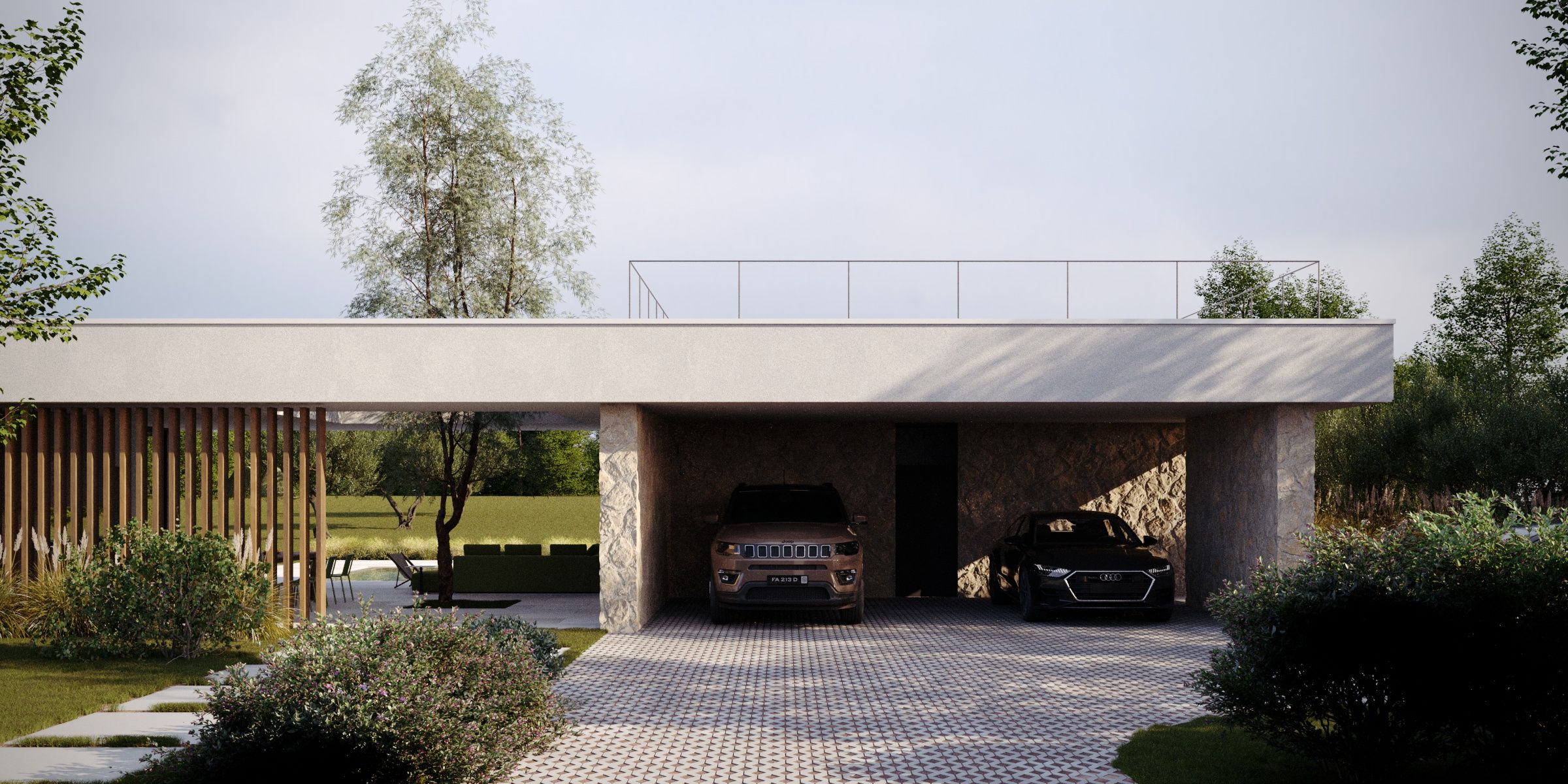
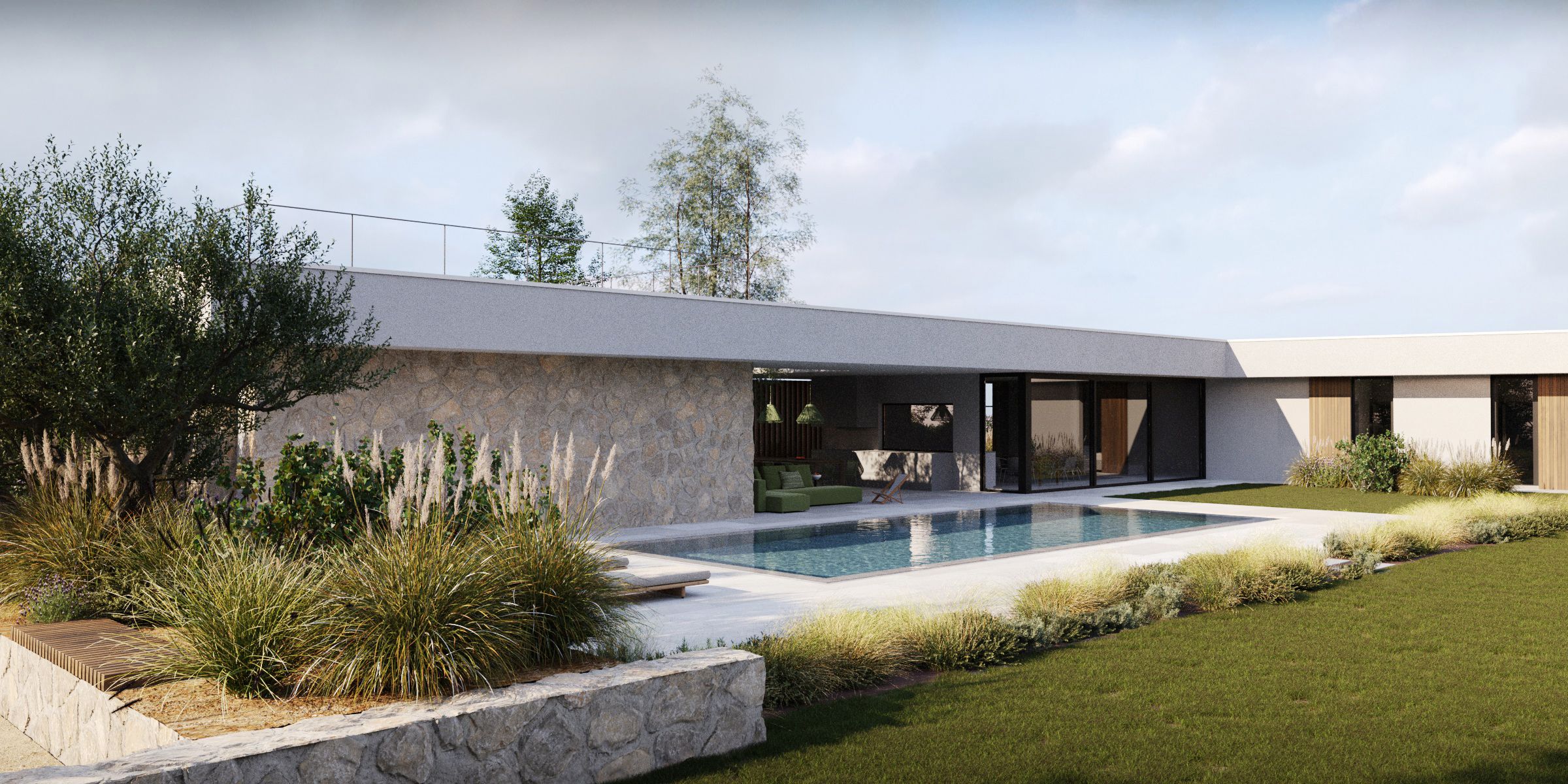
A project by the Croatian duo KAKO Studio, House K in Istria, was never “just a building”. It was a carefully considered framework for everyday living: how you move through the house, routines, the relationship between interior and exterior, and long-term comfort all shaped the planning.
That’s exactly why decisions about the construction system, wall layers, and process organization were made early, and very consciously. What makes this project even more specific is that it was executed using a CLT/DLT logic, with Slovenian contractors involved from the design phase onwards. That required a clear communication structure and tight document control throughout. In a system like this, where solid elements can be assembled without glue (DLT with wooden dowels), the importance of precise coordination of every detail and layer becomes even more pronounced.
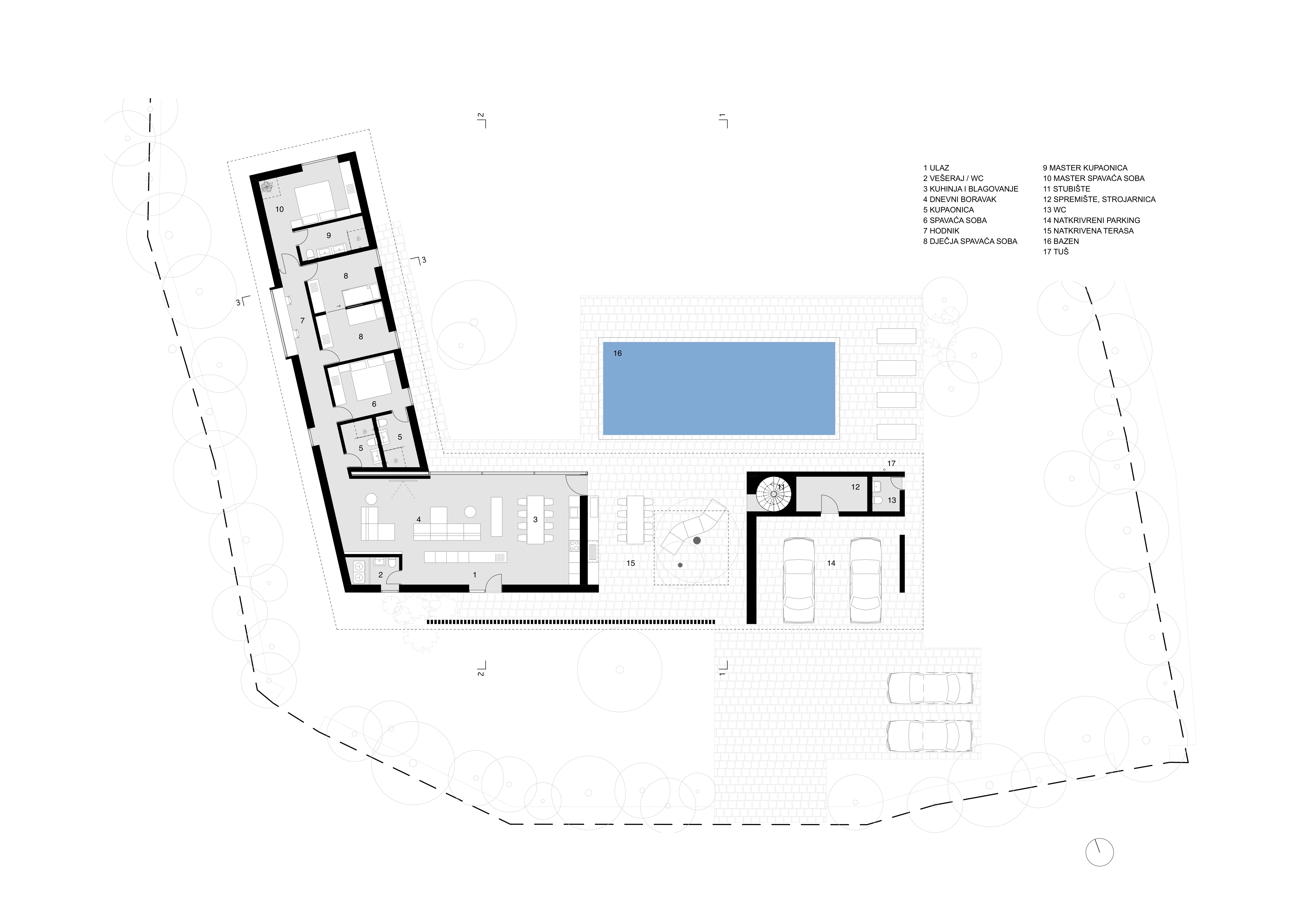
A carbon-negative project focus
Approximately 50 m³ of mass timber was used to build the house, which binds roughly 100 tons of CO₂. In contrast, the project used about 263 m³ of concrete, whose production corresponds to emissions of approximately 65 tons of CO₂. As a result, the house achieves a positive balance of about 35 tons of CO₂, which is why we can classify it as a carbon-negative, or climate-positive, building.
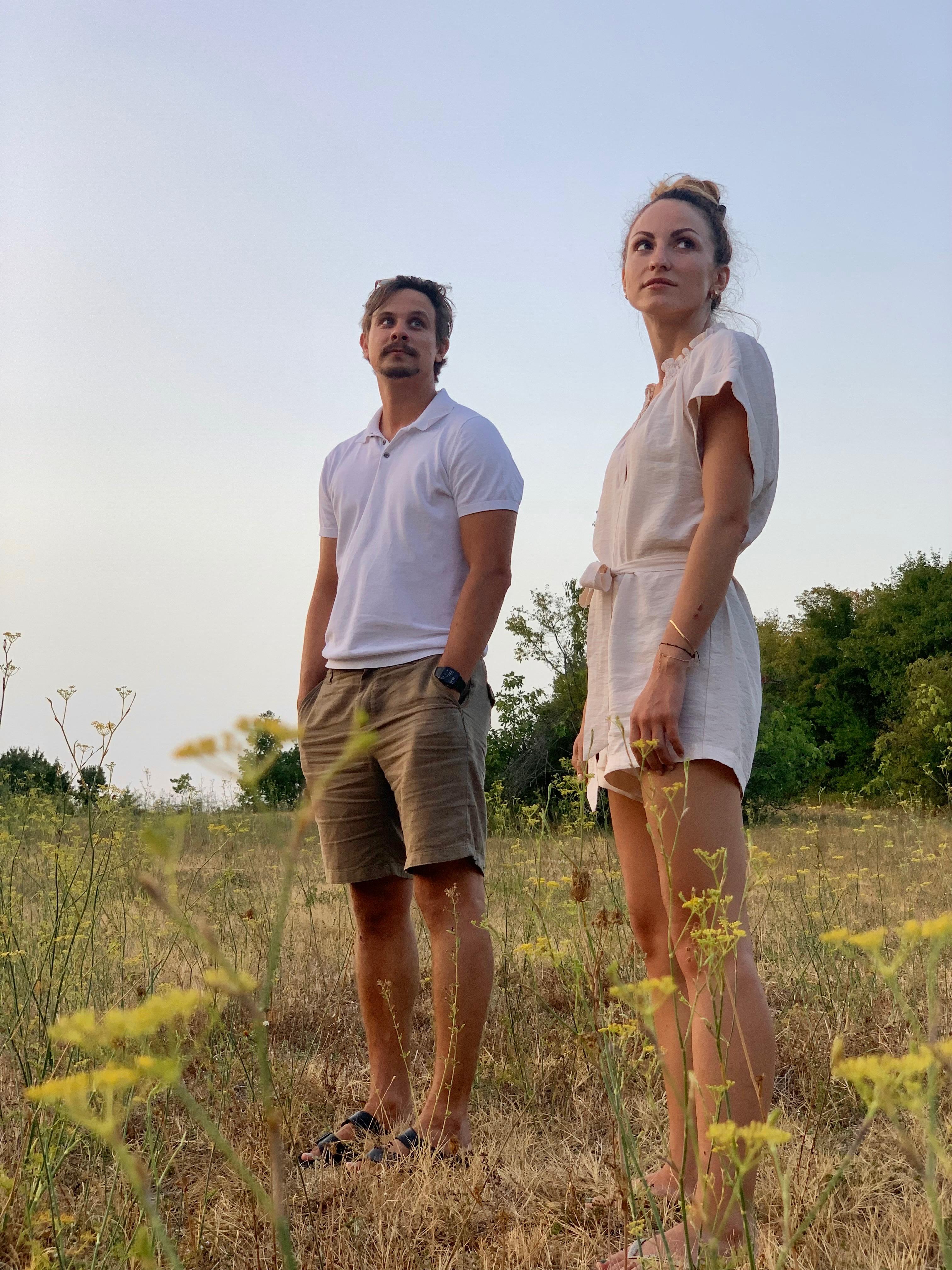
That’s why KAKO Studio chose to run the project through VOLUM3, and we sat down with the founders, Mia Kozina and Duje Katić, to tell us more.
How did KAKO Studio come to be?
KAKO was formed through the collaboration of two companies, two individuals, who very quickly realized in their independent work that together they could deliver higher-quality, more thoughtful, and more creative solutions. The studio’s name came from a simple link: the surnames Katić and Kozina.
The joint development of one project grew into an ongoing collaboration that’s now been going for more than three and a half years, marked by a series of exciting and complex tasks, and dynamic coworking in the center of Zagreb.
How would you describe your focus on projects like House K?
KAKO Studio’s focus is on life inside the spaces we create. Even in the early design stages, we think about how the space will be used, how you move through it, and everyday rituals—out of which the architectural design naturally emerges. We see projects like House K as a long-term framework for a high-quality life, not just a finished object.
Process, systems & lessons learned
What were the key milestones from the first sketch to today’s construction site?
We had the conceptual design by the end of July 2022, chose the contractor at the beginning of 2023, and construction started at the beginning of 2025. During that period, a lot of smaller and bigger challenges came up, which we worked through step by step with good communication and coordination through VOLUM3.
What inspired you to run this project through the VOLUM3 platform?
This project is specific because the house is being built in a CLT/DLT construction system, with Slovenian contractors who were involved already in the design phase, not only in execution. That kind of non-standard process required a clear structure, precise communication, and constant document control. VOLUM3 made it possible for us to systematize all documentation in one place, ensure transparency among everyone involved, and keep things clear throughout the entire process, from design to execution.
Can you describe the wall build-up and why you chose the IQwood/DLT system?
In the conceptual phase, after cost estimates, we decided with the client to explore the option of prefabricated construction as well. In that process, a smaller construction company from Slovenia stood out, with very good references and a competitive price compared to conventional construction.
At that point, we started looking more closely at the CLT/DLT system and its advantages: shorter build time, thinner walls, and environmental value. We were especially interested in the IQwood system, where solid timber panels are connected mechanically with wooden dowels, without using glue. In the end, the entire project was developed in a DLT system, which gave us valuable hands-on experience working with mass timber and confirmed the benefits of this way of building.
Is there an example from the project where a “breathing” structure showed an advantage in practice?
This type of construction is still less common in Croatia than, for example, in Slovenia, where wood isn’t closed off with drywall but remains visible, both for traditional reasons and to allow diffusion processes. In this kind of building, careful selection of all layers is extremely important, especially thermal insulation and the finishing plaster, so the system works as a whole.
Did you have any hidden costs?
From the very beginning, we included a 10–15% contingency in the cost estimates, which proved to be a realistic approach. Any increase in final costs was mainly driven by later changes in the investor’s wishes and the fact that the project extended over almost three years, during which construction prices increased.
How did you use the VOLUM3 platform?
For this project, we used the VOLUM3’s Plans and Specifications modules. The Specifications were part of the project documentation, and the Plans turned out to be a good option for tracking the construction site. They’re quickly accessible and easy for everyone involved to review. The platform also provides a clear overview of the current versions of drawings and specifications and reduces misunderstandings in communication. We also like having centralized documentation in one place, constant availability, and easy sharing of materials with collaborators and the investor.
Lessons for climate-positive builds
What are your favorite memories about to this project?
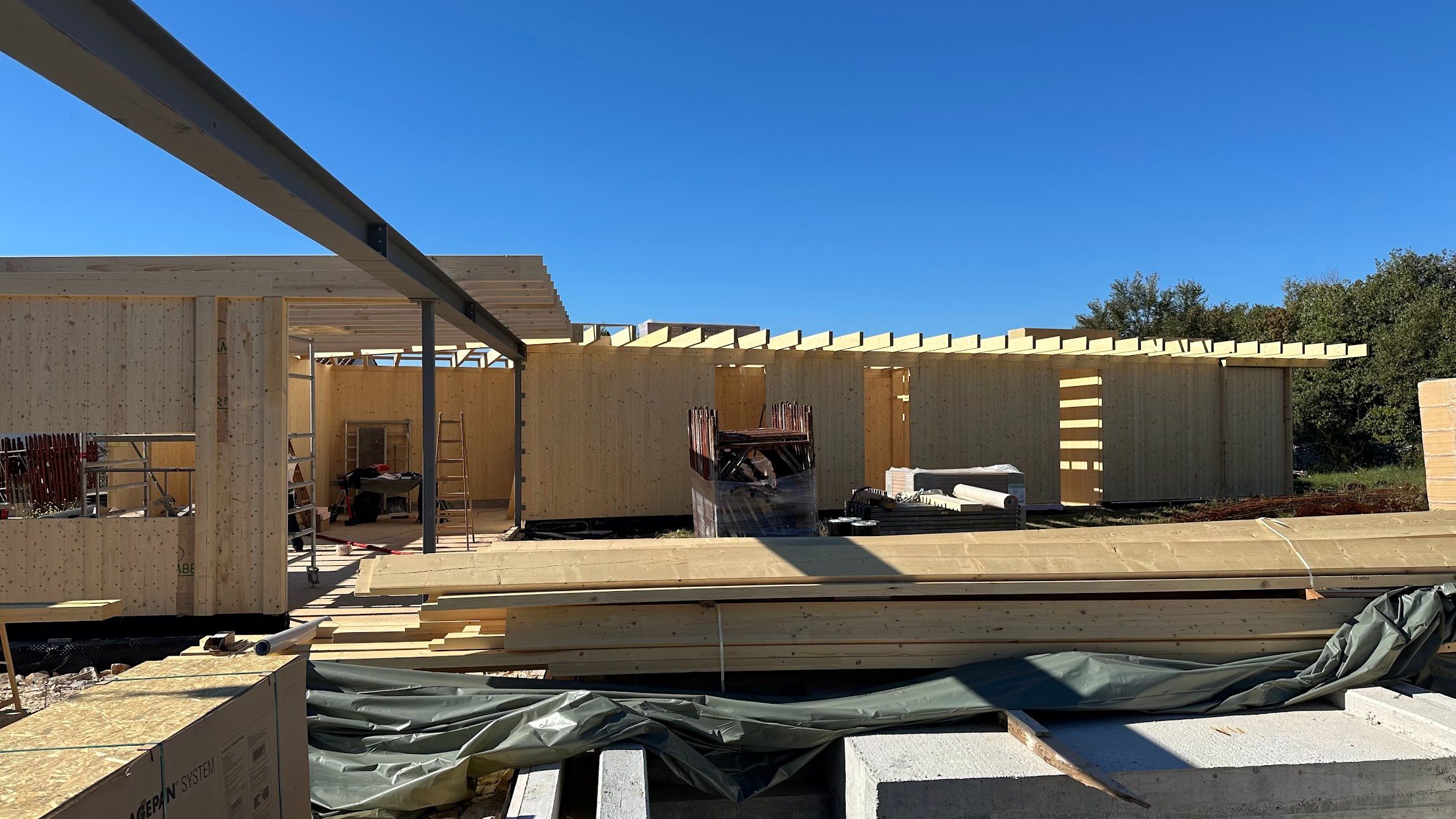
One especially striking moment was when the complete volume of the house appeared in just one week—then you really feel the speed and beauty of wood as a building material. Also, installing the external spiral steel staircase in a single piece was a special event, preceded by a lot of design work and coordination of everyone on site.
What’s visible in the photos now, and what’s “behind the scenes”?
Most of the key connections were done with steel elements that ultimately won’t be visible. One of the bigger challenges was bridging the large span of the sliding glass wall toward the terrace, solved with an HEA 280 steel beam with a total length of about 20 meters.
In the end, from the outside, only the wood will remain “behind the scenes,” but it will be visible in the interior.
Any advice for other architects planning similar low-carbon projects?
Research, good communication, and openness to new technologies. A good team of collaborators, a reliable contractor, and the investor’s support make a big difference. Knowledge is the biggest currency you bring to a construction site and into conversations with investors. Every coordination effort requires good preparation. This was our first project using wood as a building material in practice, and we gained a lot of new knowledge that we’re excited to apply in future projects.

Trg E. Kvaternika 3/3, 10 000 Zagreb, Croatia
+ 385 1 333 1909 info@volum3.com